The Light of the Nobel Prize Illuminates the Future of Materials! The 2026 Frontier Chemical Materials Forum Successfully Held
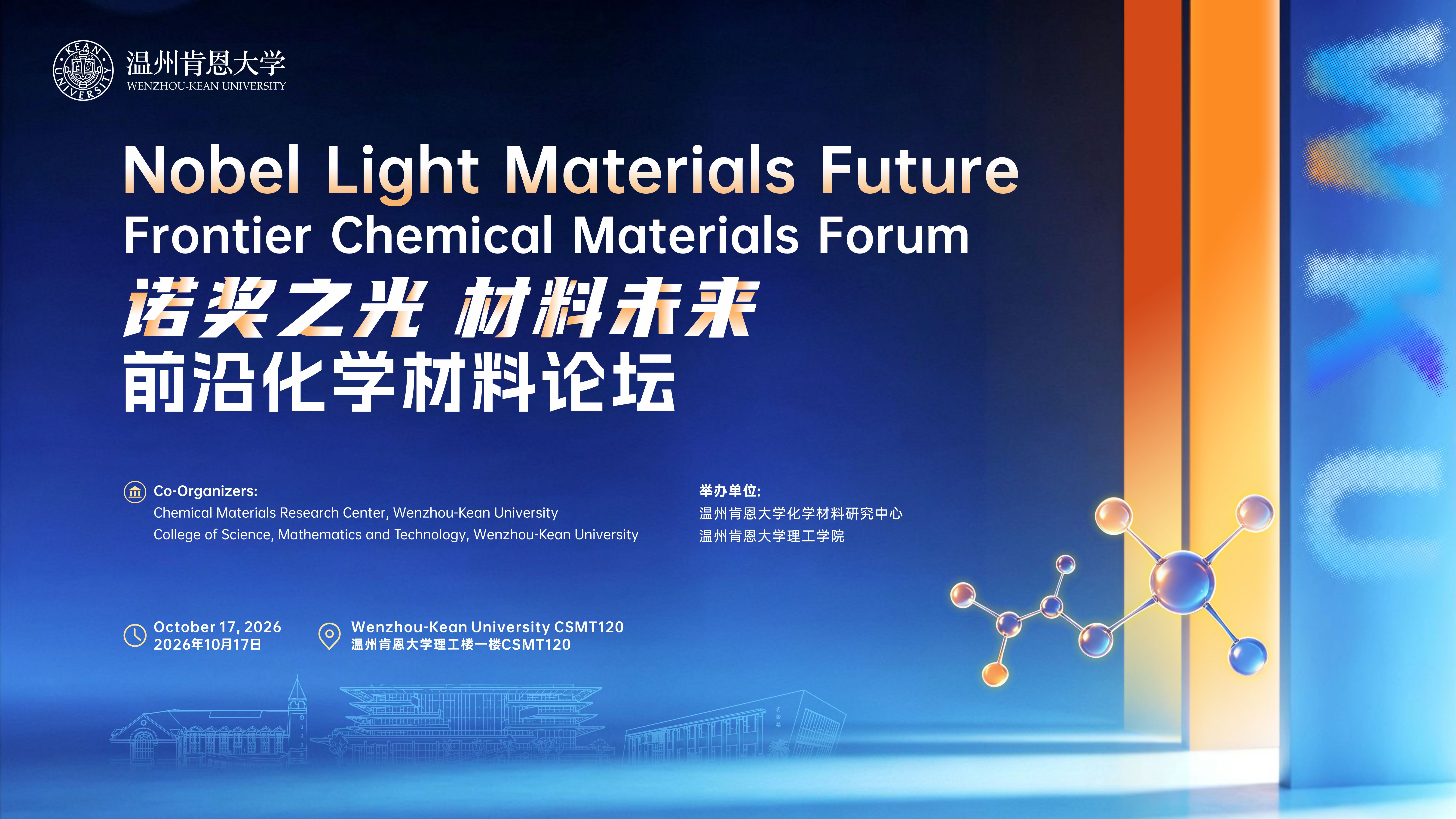
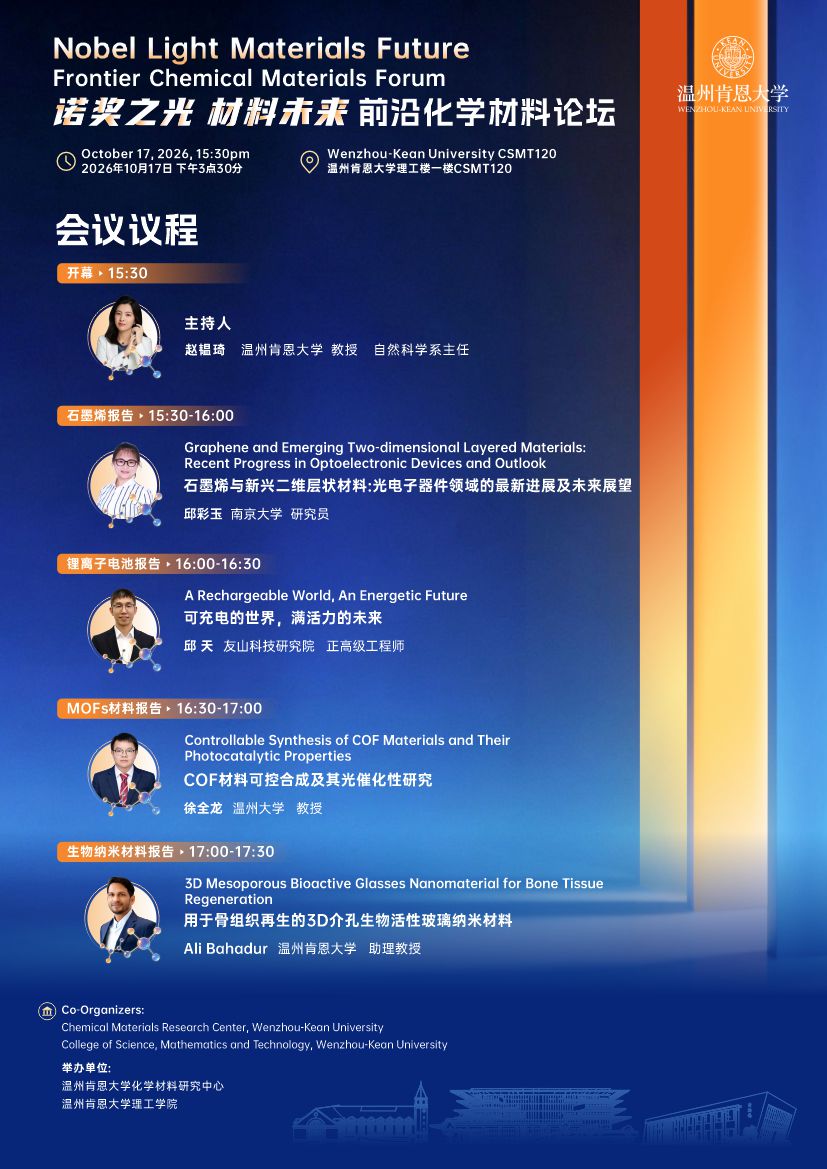
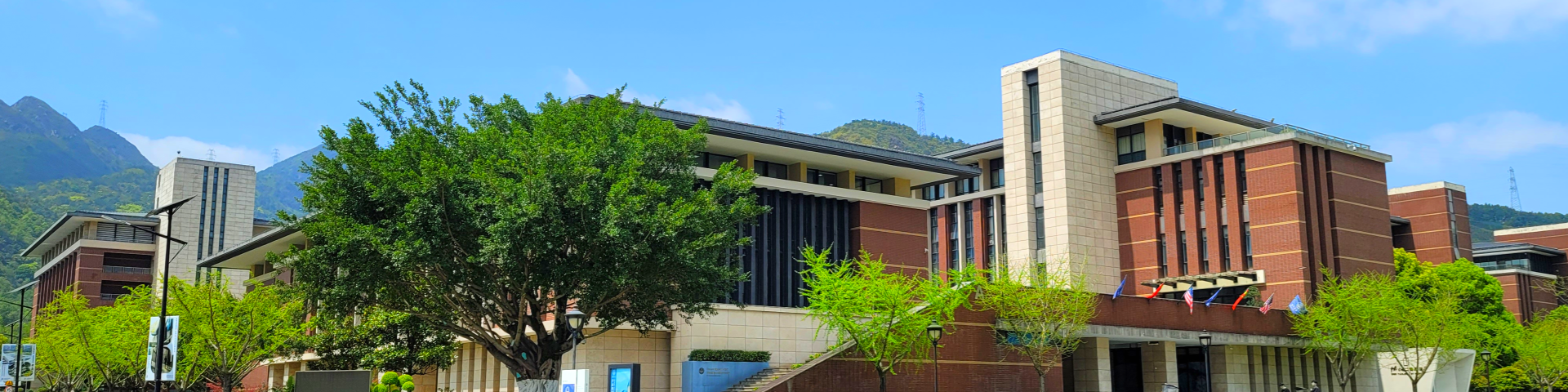
On the afternoon of October 17, 2026, the “Light of the Nobel Prize · Future of Materials—Frontier Chemical Materials Forum,” organized by the Chemistry and Materials Research Center and the College of Science and Technology at Wenzhou-Kean University, was held in Room CSMT120, Science and Technology Building.
The Frontier Chemical Materials Forum is supported by the “Science Café” initiative launched by the Zhejiang Association for Science and Technology. It upholds the principles of being “frontier-oriented, open, and collaborative,” and is based on the development needs of Wenzhou’s new materials and new energy industries. The forum focuses on three Nobel Prize-winning achievements: graphene, lithium-ion batteries, and MOF metal-organic frameworks.
Targeting young researchers and students, the forum is positioned around science popularization, research enlightenment, and foundational empowerment. It integrates the relaxed atmosphere of the Science Café, and its lectures balance popular science with professional depth, making them suitable for young students at different educational stages and with different levels of scientific background.
Photos from the event


The forum was moderated by Professor Zhao Yunqi. The program included four thematic talks: the graphene talk, centered on the 2010 Nobel Prize in Physics, introduced the progress and challenges of two-dimensional materials in the field of optoelectronic devices; the lithium-ion battery talk, using the 2019 Nobel Prize in Chemistry as its thread, focused on the technology and industrialization of mainstream cathode materials such as lithium cobalt oxide, ternary materials, and lithium iron phosphate; the MOF talk, based on the 2025 Nobel Prize in Chemistry, explained the molecular construction concept of “metal ions + organic ligands” and the applications of COFs in photocatalysis; and the bio-nanomaterials talk, taking mesoporous bioactive glass nanoparticles as an example, demonstrated the design idea of using a single material to simultaneously achieve tissue repair and drug delivery.
From graphene to lithium-ion batteries, from MOF/COF to bio-nanomaterials, the forum used Nobel Prize-winning achievements as a thread to connect the key pathways through which frontier chemical materials move from basic discoveries to technological applications and industrial transformation.